
Seeing in the Dark
Coming to Ground #26

Dearest Fellow Earthling,
When you think of the concept of “darkness”, what is the first image or feeling that comes to mind? I ask because we humans have a lot of metaphorical ways that we use the concept of darkness, and often it seems to be connected with a condition of unknowing, fear, foreboding, or evil.
Now, at Winter’s beginning we are moving into the darkest and coldest season of the year. Much of the life outside our homes has faded, died, gone fallow. Some lives are taking deep rest, curled in a burrow in the dark earth. Some exist as a possibility that is held within a seed that will send up a shoot in Spring. That feels like a darkness that is full of hope.
In our current time that holds so much polarization, outrage, fear, loss, and suffering, how might this darkness become an opening into something new and life supporting?
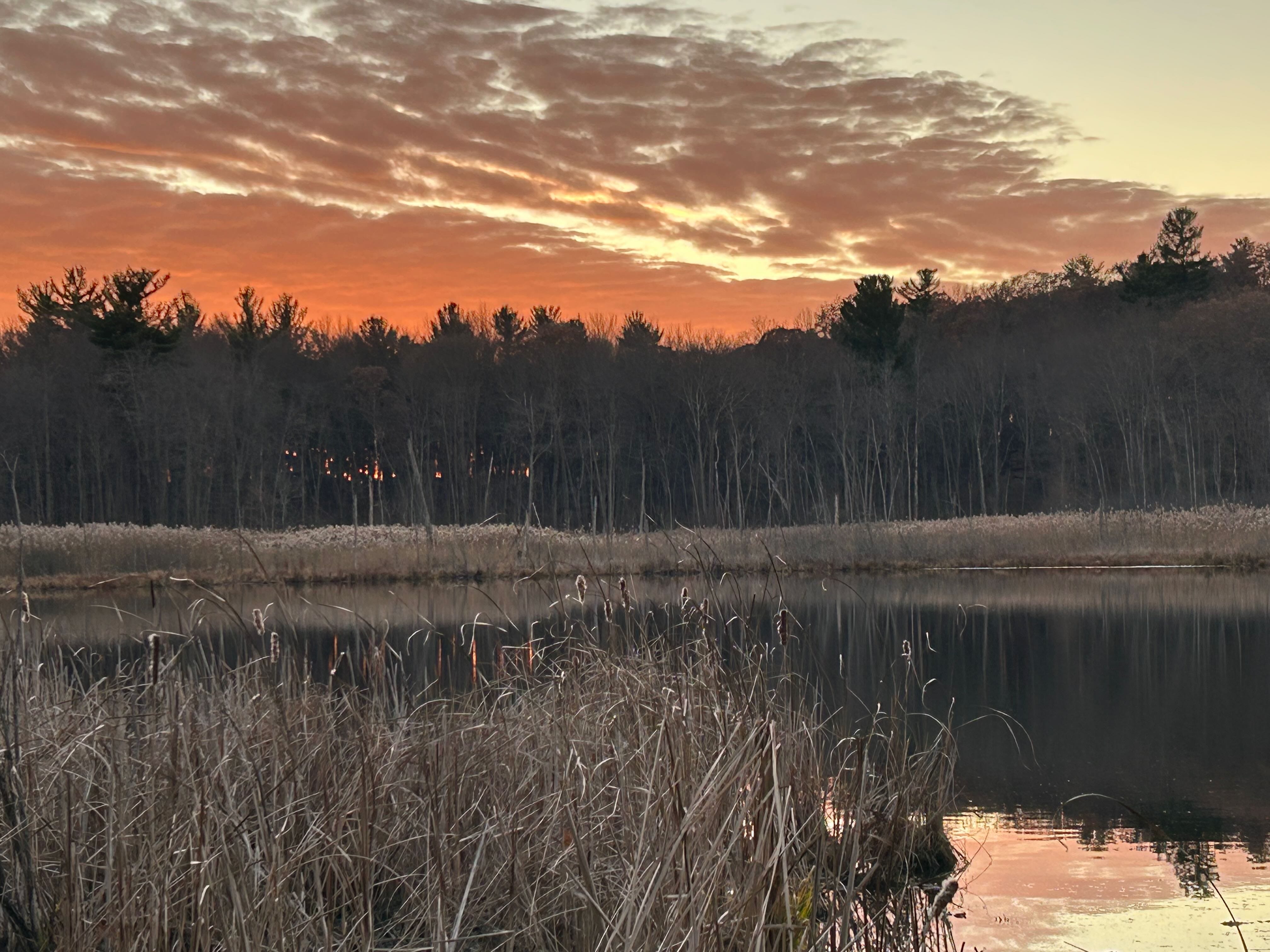
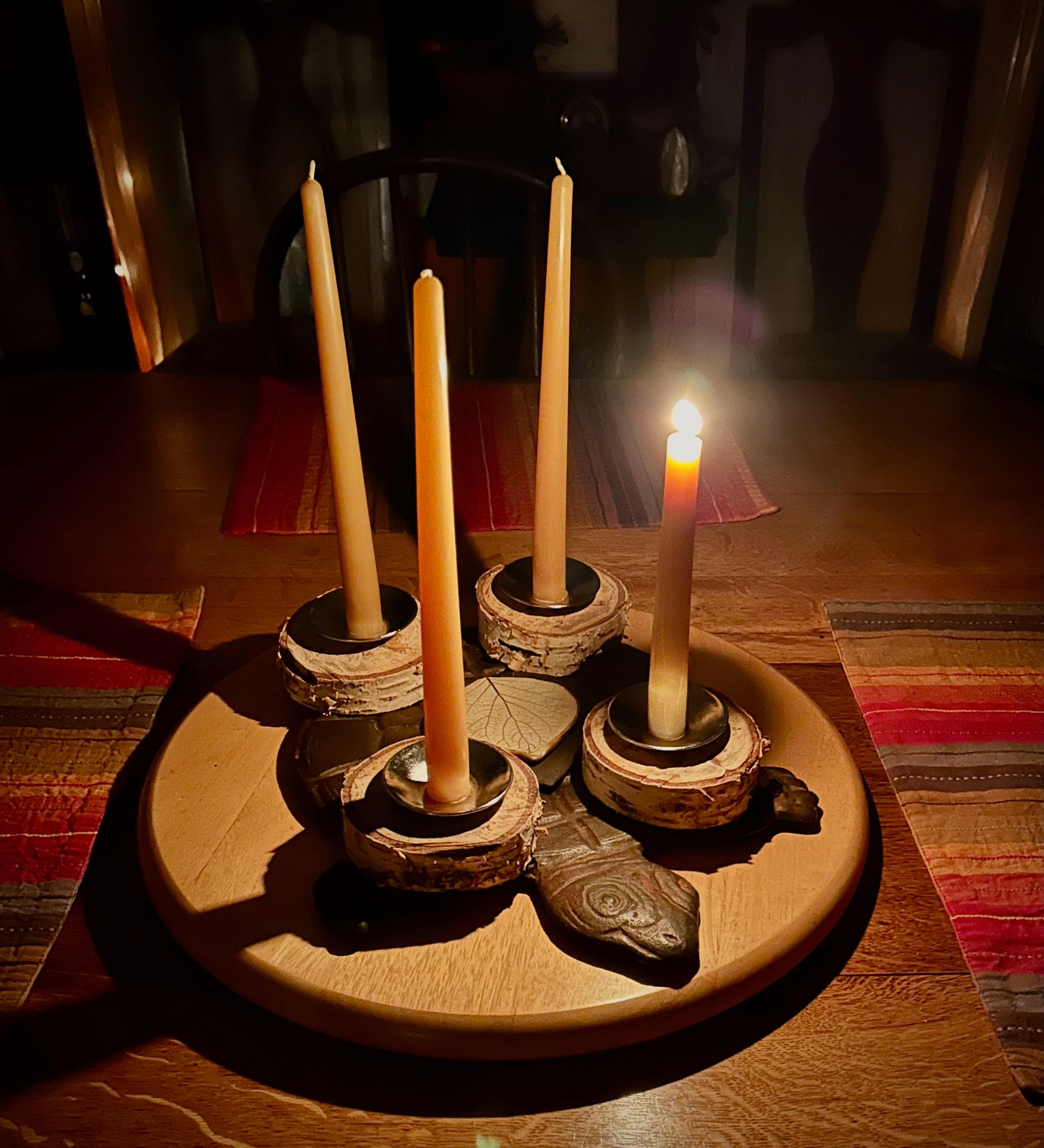
As November draws to a close, dusk comes early and passes quickly into the darkness. Night will continue to lengthen for a few more weeks. The coming season will grow colder and darker, and we’ll make our own light and warmth as well as we can. Candles are lit, strings of tiny lights are hung, sweaters and slippers hold our own heat in, and logs burn in wood stoves and fireplaces where such things are available. We stoke the fire in our own hearts by gathering with loved ones. All of these are cozy ways to make comfort and light through the dark of winter, until sunlight begins to grow again.
If we go out into the night, and quietly look up, beholding the night sky, we feel a sense of darkness that is beautiful, a darkness that is necessary for thriving, the darkness of restoration and generativity, like dark, fertile soil. This kind of darkness supports healing the way a good night’s sleep is necessary for our wellbeing.
Metaphorically, darkness may also be a descriptor for something felt as evil. The words dark and darkness might signify something evil or sinister. A situation that causes harm. As this year nears its end, many of the threats and ongoing harmful actions and policies made by the new federal government that began its work in January seem sinister. It feels like a darkening chaos that is continually brewed and bitterly poured in scalding measure, here and beyond our borders.
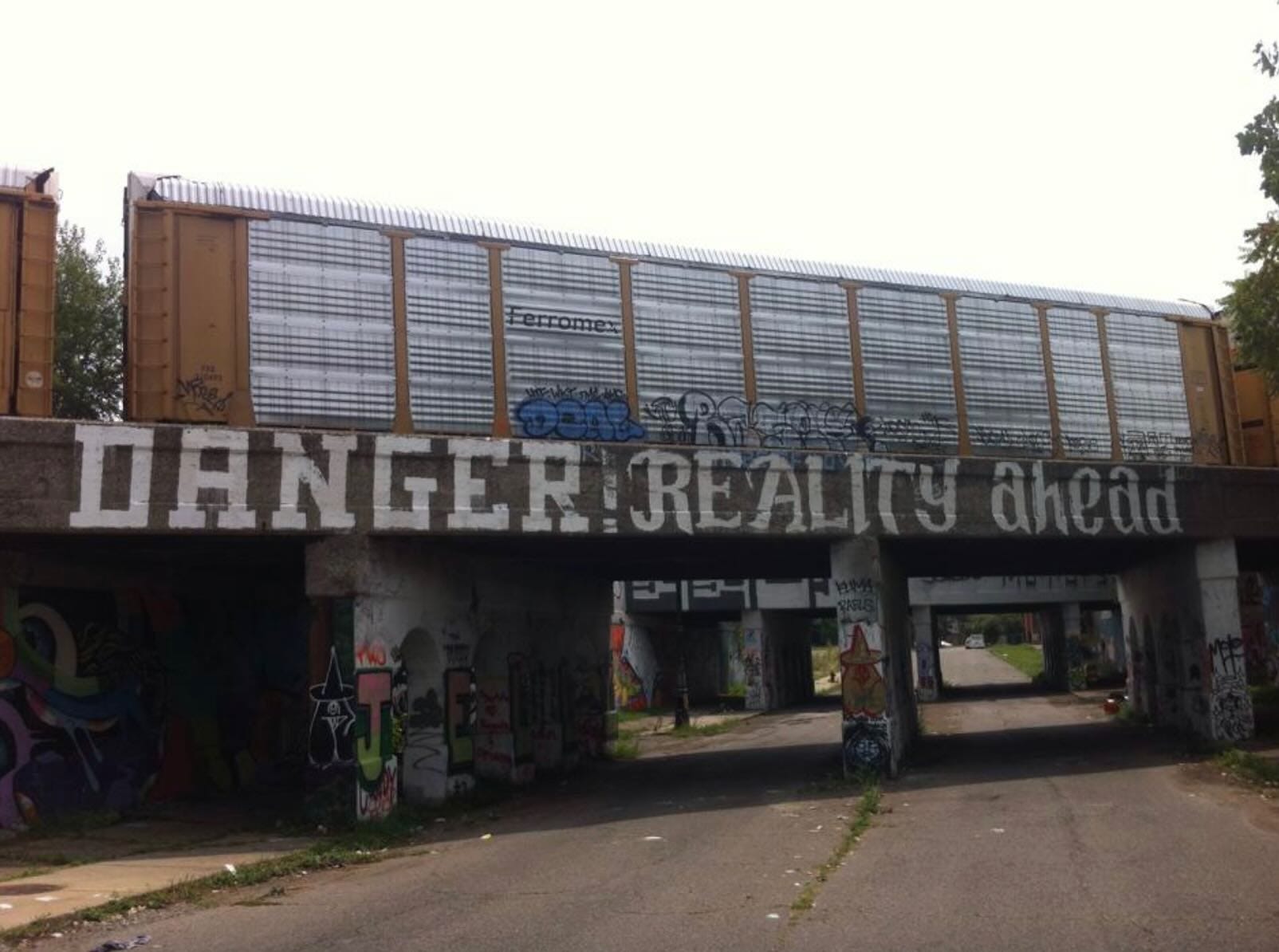
This is a kind of darkness that relates to activities that extinguish, that threaten to snuff out the light of care and support: the dismantling of programs of health care and food for low-income people,1 the removal of ecological protection and clean energy policies2, and the rapid increase of untruth that causes polarization3. All of this breeds rage, fear, hunger and increased need; all are scenes of a sinister kind of darkness, that bear no resemblance to a kind of light that shines in the darkness4 . . . though many of the architects of this derangement seem to claim they carry that kind of light in the torches they hold.
At an interfaith prayer gathering in Washington, DC after the 2016 election Sikh film maker and writer, Valerie Kaur, asked her listeners to shift perspective: “What if this darkness is not the darkness of the tomb, but the darkness of the womb?”
Deep, unexpected love may rise up and blossom out of great pain and loss. Beauty may grow from the rubble of ugliness. Out of darkness, something full of new life may come. This kind of emergence might be identified as a kind of hope.
There is a narrative central to capitalism that claims “every man for himself”. That philosophy is decidedly antisocial, but it is countered by a natural impulse humans seem to have that leads us to help one another, care for our children and to love our neighbors. We are vulnerable creatures. We need one another and safe places to rest. That awareness is baked into most of us, threading through our flesh and blood, drawing us together. In her book, “Paradise Built in Hell”5, Rebecca Solnit made a strong case for the natural impulse of humans to mobilize toward generosity, and set up local networks of mutual aid during disaster. In times of chaos and harm, we join hands and get to work.6
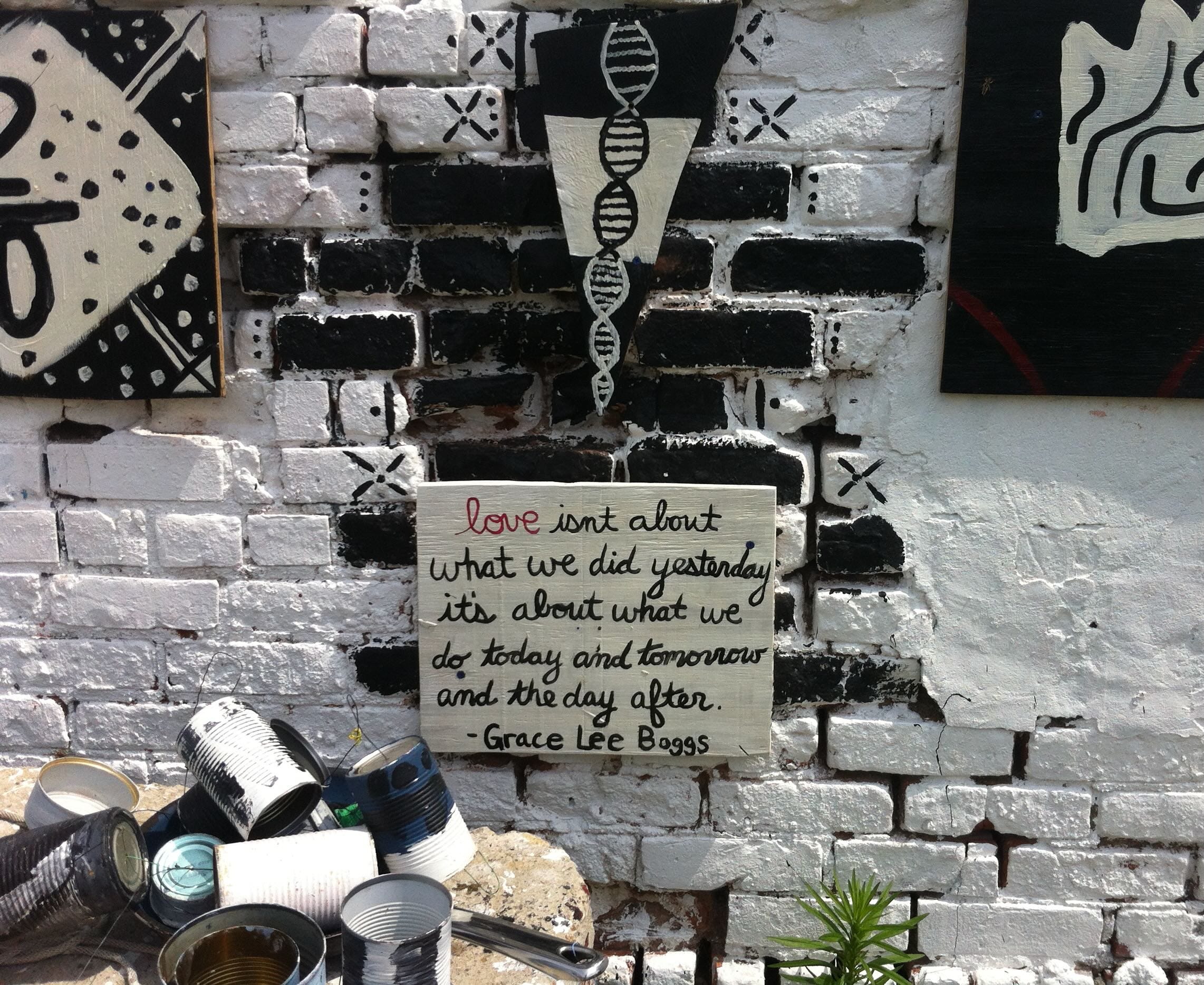
In her nineties, the Detroit visionary, philosopher and social activist, Grace Lee Boggs (1915 – 2015) engaged in a public conversation with Angela Davis at the 27th Empowering Women of Color Conference, at University of California, Berkeley.7 Within that conversation, she issued an enthusiastic invitation:
“In the 1950s Einstein said the splitting of the atom has changed everything but the human mind and thus we drift towards catastrophe. And he also said that imagination is more important than education. In other words, the time has come for us to reimagine everything. We have to reimagine work and go away from labor. We have to reimagine revolution and get beyond protest. We have to think not only about change in our institutions, but changes in ourselves.”
Grace called for a paradigm shift and the need for discourse. She mentioned the need to “grow our souls” and to have enough courage to talk about that kind of expansion:
“What I mean by souls is the capacity to create the world anew, which each of us has. How do we talk about that with one another? . . . It’s not only important to act, it’s important to talk because when you talk, you begin to create new ideas and new languages. We’ve all been damaged by this system, it’s not only the capitalists who are the scoundrels, who are the villains, we are all part of it. And we all have to change what we say, what we do, what we think, what we imagine.”
Angela Davis then offered insight that exemplifies the way thoughtful conversation opens and expands possibility:
“. . . we have all learned to imagine ourselves as individuals. It is as if we have forgotten that we are always members of communities. I’m totally seduced by your notion of growing the soul, and growing a soul that experiences itself in the context of communities and collectivities. There is the tendency to think of ourselves as isolated individuals and of course this is what the capitalists have achieved and capitalism is grounded in that notion that the individual, that the possessive individual is the primary unit of society. And if we are to move toward revolutionary approaches we have to relearn—and I say relearn because I think somewhere deep inside, we have to recognize that we are connected to each other and every single being on this planet. So, thank you so much for that wonderful notion of growing our souls and community.”

When I read Grace’s words for the first time, I lingered on this phrase: “We’ve all been damaged by this system . . .”
I felt the dark and painful recognition of our seemingly helpless complicity as we participate in this postmodern apocalyptic time, when hauling full bags of garbage out to the curb each week is mundane; when people expect to eat cheap meat every day (sometimes multiple times in a day) and many of us consume more calories than we need on a regular basis while others go hungry; when we move around alone in elaborately constructed private vehicles that could fit five or six people, burning 376 million gallons per day8[1] of oil from the remains of animals and plants that died 300 million years ago, pumped out of deep holes drilled into the crust of the land or the bottom of the ocean; when we burn that finite, precious, carbonaceous substance, transforming it into a carbon dioxide gas that accumulates in our atmosphere and is rapidly changing a long stable climate into a volatile one.
We must be willing to see and accept our own culpability in order to grow beyond that reality and move to remedy it. Meanwhile the clock is ticking . . . I was a baby born and raised in this system, a frog in the boiling water who wants to jump out, and there doesn’t seem to be many places to land . . .
And then, I am moved by Angela’s life affirming words, full of clarity: she takes the particular and expands it into the universal with her articulation of the fallacy of individualism. She brings us right into our embeddedness in mutuality with all other lives on our finite planet. There is literally no life without mutuality and interspecies relationship.
I am back in the fold . . . deep breath.

Traveler, there is no path.
The path is made by walking.~Antonio Muchado9
The condition of unknowing that we feel before something happens is also a kind of darkness. We wait in darkness, are in darkness—whether in total unawareness, in anticipation of surprise, or even expectantly waiting for something we envision will happen, but there still remains a dimension of unknowing. This kind of “before time” darkness often contains hope. In our unknowing, we hope, perhaps fervently, for the best and most beautiful. We learn to find our way.
In the forward to the second edition of her book “Hope in the Dark”, Rebecca Solnit articulates this reminder:
“Hope locates itself in the premises that we don’t know what will happen and that in the spaciousness of uncertainty is room to act. When you recognize uncertainty, you recognize that you may be able to influence the outcomes—you alone or you in concert with a few dozen or several million others. Hope is an embrace of the unknown and the unknowable, an alternative to the certainty of both optimists and pessimists.”
Eco-philosopher and wisdom teacher, Joanna Macy and resilience specialist, Dr. Chris Johnstone, identified two kinds of hope, passive and active:
Passive Hope arises when “our preferred outcome seems reasonably likely to happen. If we require this kind of hope before we commit ourselves to an action, our response gets blocked” by the risk of failure and perceptions of futility. We may become disengaged or hopeless because we are dependent upon external agencies. Pessimism and despair begin to grow.
Active Hope arises out of a deep desire for what we long to see happen, but not out of false optimism, which tends to gloss over all the hard work that needs to happen. This kind of hope involves practice, and it begins with identifying what is longed for, and then engaging in actions that move in that direction. This might look like volunteering for a soup kitchen, picking up trash with friends at a local park, planting a garden of native plants for pollinators. Each of these actions involve engagement that builds a sense of community and belonging with our neighbors, human and more-than-human.10
Engaging in active hope is not one big fix, it is an actionable step in a hopeful direction, a small slice of heaven on Earth that is in your midst, a condition that you co-create with others. You enter with your own light shining and your feet on the ground. Love and care ripple outward from the center, touching others.
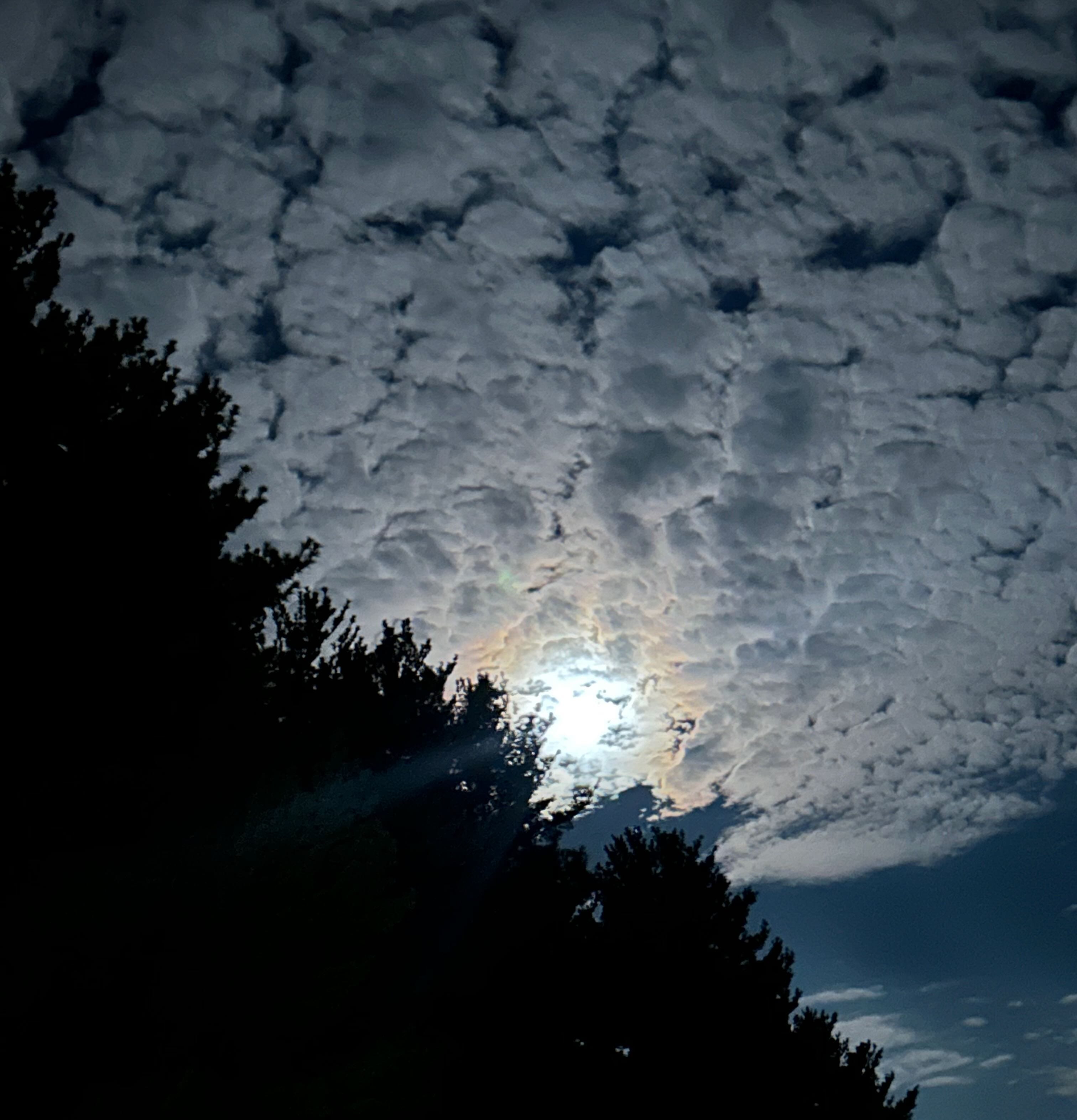
December unfolds within more ample, generative darkness than any other month. There is no other time of the year when collective hope burns more brightly out of darkness. In the weeks of midwinter, before and after the Winter Solstice we bask in the hearth fires of the human heart and spirit, lighting candles, giving our gifts, and expressing gratitude. We yearn toward the rebirth of light and sing songs of peace and love.
May we keep our little lights burning, offering kindling or a flame to others in need when we are able. May we work together to build a true kin-dom with one another in all of our beautiful diversities. And may we make time for rest within the regenerative darkness of winter.
In the tender mercy of Holy Mystery,
the dawn from on high will break upon us,
bringing light to those who sit in darkness and in the shadow of death,
guiding our feet onto the way of peace.
(from The Song of Zechariah, in the Gospel of Luke, 1:78-79, paraphrased)
If you aren’t ready to subscribe to
Coming to Ground,
you can: Buy Michelle a Coffee :-)
Listen to: “Keep Your Lamp Trimmed and Burning”
Andrew Bird’s resonant version of an old spiritual on his 2002 album, Fingerlings
In 2023, 20% of children in the US were in food insecure households—and those are the ones who are actually counted. I shudder to think of that number increasing with all that has been rolled back by the current US government in 2025. One demographic in particular will be disproportionately affected: legal residents who are immigrants are no longer eligible. But there are many more cuts: for a rundown on the new federal changes to SNAP and other benefits for low income people, see: https://www.ncsl.org/state-legislatures-news/details/5-changes-the-beautiful-bill-is-bringing-to-snap
See the following for a rundown of these losses: https://www.nytimes.com/2025/11/22/climate/trump-environmental-policy-week.html?unlocked_article_code=1.408.wEqW.G3F7kuVV0rlI&smid=url-share
The Brookings Institute report: https://www.brookings.edu/articles/how-disinformation-defined-the-2024-election-narrative/
John 1:5
Solnit, Rebecca. A Paradise Built in Hell: The Extraordinary Communities That Arise in Disaster. New York: Viking, 2009.
Though many oppose government funding for social programs of support, this is merely an extension of each of our hands to the needy through the fruits of our labor: our paychecks. We come to the aid of our neighbors. Perhaps the way we are separated from the hand that feeds makes it too abstract for a lot of people, and certainly the taxes we pay are inequitable when the ultra-rich pay very little in the way of taxes and get away with wages that are not considered adequate to live a reasonably comfortable life without accruing debt. Example: Amazon pays the most company workers low wages, while Jeff Bezos took a salary of only $80,000 in 2024 to keep his income tax low, and then made $8,000,000 per hour on capital gains that are subject to an extremely low tax rate. As of December, 2024, Bezos was worth 246 billion, more than he could ever spend. See this for perspective: How to Be a Good Billionaire, Part 2: How to Spend a Billion Dollars (by Substacker, Ally Jane Ayers, @moneychangeseverything )
“On Revolution: A Conversation Between Grace Lee Boggs and Angela Davis”, Empowering Women of Color Conference: A Holistic Approach: Justice, Access and Healing, Pauley Ballroom, University of California, Berkeley, 3/2/12.
In the USA, alone: https://www.eia.gov/tools/faqs/faq.php?id=23&t=10 (2023)
Traveler, Your Footprints by Antonio Machado (trans. Mary C. Berg and Dennis Maloney)
Active Hope: How to Face the Mess We’re in without Going Crazy, J. Macy & C. Johnstone, New World Library: Novato, CA, 2012, p 3. This work is the underpinning for the powerfully transformative program, “The Work that Reconnects”. Book written as an introduction to and guide for the program: Joanna Macy and Molly Brown, Coming Back to Life: The Updated Guide to the Work That Reconnects, New Society Publishers: Gabriola, BC, Canada, 2014.
Timely, heartwarming and inspirational Michelle. And my favourite Machado line too! Much gratitude. Love and blessings 💚
Thank you for this thoughtful exploration. More and more I am feeling the beauty and mystery of darkness as a metaphorical journey deep into the ground of the soul, the territory of intuition and the divine feminine. There lives our shadow, the fragmented pieces of our psyches that wait to be reclaimed and brought home. When the shadow of decades has risen to the surface, as it has now in the U.S., it is frightening and ugly. Yet, it is also a time when we have a clear choice before us to follow this path of healing, to metabolize and integrate more pieces America's shadow self, as Americans have united to do many times in the past. It is long work. But so may it be, with the help of our persistent care, vision and peaceful actions. xo